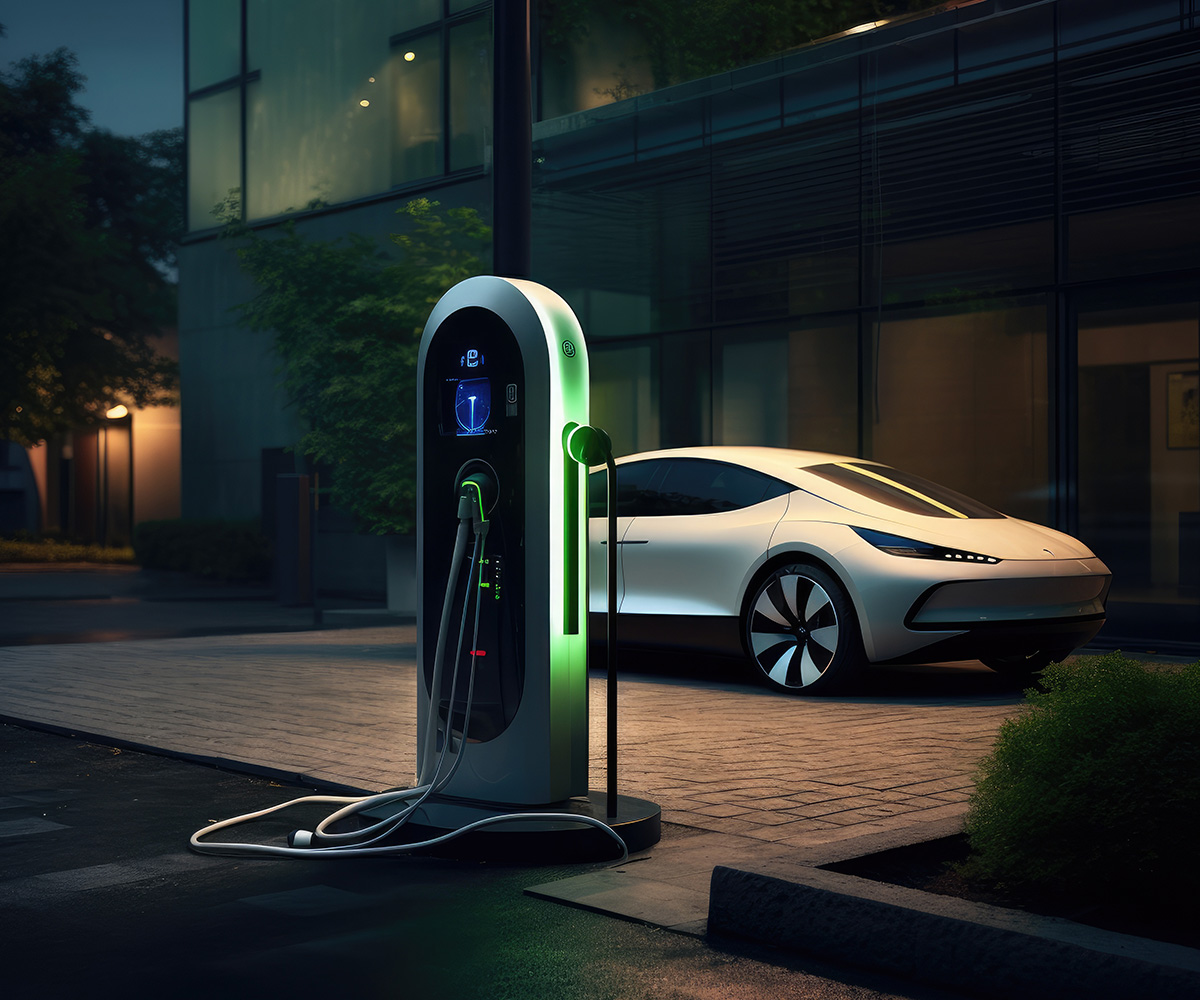
Strategic Steps to Launch Your EV Charging Station Business in India

Introduction

India’s transition to electric mobility is creating a booming market for EV charging infrastructure. Starting a charging station business today not only offers strong financial potential but also contributes to the country’s clean energy mission. With supportive policies, rising EV adoption, and expanding technology, entrepreneurs have the chance to build a future-ready venture. The key lies in making smart choices at every stage — from selecting locations to scaling operations.

Location Matters Most

Success begins with choosing the right site. Customers look for stations that are visible, accessible, and reliable. Some of the most promising options include:

Highways and transit routes for long-distance travelers

Shopping malls, offices, and IT parks with steady daily traffic

Housing complexes and gated communities where EVs are parked overnight

Existing fuel stations that already attract drivers

A strategic site ensures consistent demand and brand visibility.

Navigating Approvals

One major advantage is that no special license is needed to operate an EV charging station in India. However, a few clearances are still essential to get started:

Electricity connection from your local DISCOM

No-Objection Certificate (NOC) from the municipal authority

Fire safety approval for compliance

With these approvals in place, setting up becomes relatively straightforward compared to traditional fuel businesses.

Building the Right Setup

Not all charging solutions are the same — the right mix can make your station both practical and profitable.

AC Chargers → Perfect for homes, offices, and malls where cars are parked for longer durations.

DC Fast Chargers → Ideal for highways, fleet hubs, and locations where drivers want speed.

Hybrid Setups → A mix of AC and DC chargers balances affordability today while preparing for future growth.

When setting up, invest in quality equipment from trusted vendors. Civil and electrical work — transformers, wiring, and safety systems — forms the backbone of your station. For long-term savings, consider solar panels or battery storage, which cut costs and appeal to eco-conscious customers.

Smarter Operations Through Technology

Modern charging stations run on automation. By integrating the right software, you can minimize staffing needs while offering a seamless customer experience.

Mobile booking apps for easy access

Digital payments via UPI, wallets, or cards

Real-time monitoring for performance and uptime

Remote diagnostics to reduce downtime

This tech-driven approach ensures reliability and builds customer trust.

Financing & Incentives

While there is an upfront investment, multiple schemes ease the financial burden:

FAME-II subsidies for EV charging infrastructure

State-level capital subsidies and tax incentives

Franchise models or partnerships that lower entry barriers and operational risks

Combining incentives with smart financing can accelerate break-even and growth.

Scaling for the Future

EV adoption in India is growing at over 40% annually, and early movers have an edge. Many entrepreneurs start small with 2–3 chargers and expand steadily. Growth opportunities include:

Adding battery swapping stations for two- and three-wheelers

Partnering with malls, hotels, and housing societies

Expanding into Tier-2 and Tier-3 cities as adoption spreads

Scaling strategically ensures sustainable operations without overwhelming initial investment.

Conclusion

Launching an EV charging station in India is not just a business opportunity — it’s a chance to be part of a national movement toward cleaner mobility. With the right location, equipment, technology, and financing, you can create a profitable venture that powers both vehicles and change. The path forward is clear: start smart, grow steadily, and build a future-proof business in one of the fastest-growing industries of this decade.
Franchising the Future: EV Charging Station Franchises in India

Introduction

Not everyone wants to build an EV charging business from scratch. For entrepreneurs looking for turnkey solutions, franchising with established brands is a smart option.

Why Consider EV Charging Franchises?

For many entrepreneurs, starting an EV charging business from scratch can feel overwhelming — from setting up infrastructure to managing technology and attracting customers. Franchising provides a lower-risk pathway by offering the backing of an established brand. With ready-made infrastructure, proven technology, and operational support, franchisees benefit from a plug-and-play model.

Another major advantage is access to an existing customer base and nationwide marketing campaigns. Instead of building awareness from the ground up, franchise owners can tap into the trust and visibility already created by the parent brand.

Top Franchise Opportunities in India

India’s EV ecosystem is expanding rapidly, and several well-known companies are leading the charge with franchise opportunities. Some of the top names include:

Tata Power EZ Charge – One of the largest charging networks in the country.

Ola Electric – Expanding charging options for two-wheelers and fleets.

Ather Grid – Strong presence in urban centers with fast-growing adoption.

Fortum India – Backed by international expertise in clean energy.

ChargeGrid by Magenta – Known for innovative, smart charging solutions.

Each of these brands offers unique models and support, allowing entrepreneurs to choose based on location, scale, and investment appetite.

Investment Requirements

The cost of setting up an EV charging franchise varies depending on scale and type of chargers installed.

Small setups (primarily AC chargers): ₹5–10 lakh

Mid-tier hubs (with DC fast chargers): ₹20–50 lakh

Large multi-charger stations: ₹1–2 crore

For new entrants, small setups often provide a manageable starting point, with the flexibility to scale up as demand grows.

Support Offered by Brands

One of the biggest attractions of franchising is the extensive support that comes along with it. Franchise partners typically receive:

Assistance with hardware procurement and installation

Technology integration for smooth operations

Maintenance and remote monitoring for reliability

Branding, marketing, and software support to attract and retain customers

This level of backing reduces operational headaches and ensures consistency across locations.

ROI Potential

Like any business, profitability depends on factors such as location, charger mix, and usage rates. However, EV charging franchises are proving to be promising investments. The typical payback period ranges from 3 to 5 years, making them attractive compared to other infrastructure-heavy businesses.

Earnings can vary widely. A small setup may generate ₹50,000 to ₹2 lakh per month, while larger fast-charging hubs can deliver significantly higher revenues, especially in high-traffic urban or highway locations.

Conclusion

EV charging franchises represent one of the most accessible ways to participate in India’s green mobility revolution. By partnering with trusted brands, entrepreneurs can reduce risk, leverage proven systems, and tap into a rapidly growing market. As adoption accelerates, franchising is poised to become one of the most popular and sustainable business models in the EV sector.

EV Charging Stations in India: License-Free Setup & ₹25 Lakh Annual Revenue Potential

Introduction

India is on the cusp of an electric vehicle (EV) revolution. With the government pushing for cleaner mobility, automakers investing in EV production, and consumers slowly adopting eco-friendly alternatives, the demand for reliable EV charging infrastructure is soaring.

For entrepreneurs, this presents a golden opportunity. Setting up an EV charging station in India is not only license-free but also highly profitable—earning up to ₹25 lakh annually under the right business model. In this blog, we’ll explore the step-by-step requirements, cost, profitability, and growth outlook of EV charging stations in India.

Why EV Charging Stations Are India’s Next Big Business Opportunity

Exploding EV Adoption

India’s electric vehicle market is booming. Between 2021 and 2023, EV sales grew by a staggering 230%, with over 1.5 million units sold in FY23 alone. This momentum is being accelerated by strong government backing — subsidies under the FAME-II scheme, reduced GST on EVs (from 12% to 5%), and tax incentives that make ownership more affordable.

Yet despite this growth, the infrastructure has not kept pace. As of 2024, India has just 1 public charging station for every 235 EVs (ET Report). This imbalance represents a massive demand-supply gap — and a golden opportunity for entrepreneurs ready to invest in charging solutions.


Low Regulatory Barriers

Unlike fuel pumps or power plants, EV charging stations do not require a license in India. This dramatically lowers entry barriers. Instead, operators only need:

  • A stable electricity connection from the local DISCOM
  • A No Objection Certificate (NOC) from municipal authorities or the Forest Department (if applicable)
  • Fire safety and wiring compliance for basic safety

This ease of entry makes the business accessible even for first-time entrepreneurs.


Investment & Setup Costs

The cost of setting up a charging station varies based on scale and charger type, but the business is flexible enough to suit different budgets.

  • Space Requirements: Around 100 sq. ft. in total; individual chargers take only 10 sq. ft. Ideal locations include highways, malls, IT parks, residential complexes, and fuel stations.
  • Charger Costs: AC chargers cost ₹1–3 lakh, while DC fast chargers range from ₹10–40 lakh. Ultra-fast chargers (150–350 kW) may go up to ₹80 lakh.
  • Overall Setup:
    • Small (AC only): ₹1–5 lakh
    • Mid-scale (AC + DC mix): ₹20–50 lakh
    • Large commercial hubs: ₹50 lakh–₹1 crore

👉 This flexibility allows entrepreneurs to start small and scale as demand grows.


Revenue & Profitability

Profitability depends on utilization rates, electricity tariffs, and operating hours. A well-placed medium-sized station can deliver strong returns.

  • Example: With a daily capacity of 3,000 kWh and an average tariff of ₹15/kWh, revenue can reach ₹45,000/day — translating to over ₹1.6 crore annually.
  • Even after accounting for electricity costs, rent, and maintenance, net earnings of ₹20–25 lakh per year are achievable.

Additional revenue streams include:

  • Digital advertising on charging units
  • Battery swapping services (especially for 2W and 3W fleets)
  • Co-located businesses like cafés, convenience stores, or car washes
  • Solar integration to cut electricity bills and attract eco-conscious customers

Operations & Staffing

EV charging stations are highly tech-driven and require less manpower compared to fuel pumps.

  • Technology Integration: Cloud-based monitoring, AI-driven load management, and mobile apps for booking and payments streamline operations.
  • Staffing: Small setups may need just one technician or security staff; larger hubs employ 3–5 staff for support and maintenance.
  • Operating Costs: Typically 10–15% of revenue goes toward electricity, rent, maintenance, and app subscriptions.

Government Incentives

Policy support makes this business even more attractive:

  • FAME-II subsidies reduce charger procurement costs.
  • GST on chargers is only 5%, lowering upfront investment.
  • State-level incentives (Delhi, Maharashtra, Gujarat, etc.) include land concessions and subsidies of up to ₹10 lakh per station.

These benefits significantly improve ROI, making payback periods shorter than many traditional businesses.


Future Growth Potential

India is aiming for 30% EV adoption by 2030, which will require more than 1.3 million charging stations compared to the current ~26,000. Market size is expected to reach USD 48.6 billion by 2030 (Acuity Research).

This explosive growth means that early entrants are well-positioned to dominate their regions, build strong customer bases, and capture long-term profitability.


Conclusion

EV charging stations are not just another business trend — they are the backbone of India’s clean mobility revolution. With no licensing hassles, flexible investment models, strong government support, and rising consumer demand, entrepreneurs today can build ventures that deliver ₹20–25 lakh annual net earnings while contributing to a greener future. The road ahead is clear: those who invest early will lead India’s transition into the EV era.

India’s EV Charging Infrastructure: 5× Growth in 3 Years—But Still Behind the Curve

Introduction

India’s electric vehicle (EV) adoption is accelerating at an impressive pace. Yet, the charging infrastructure needed to support this transition is lagging. While the number of public charging stations has grown fivefold in just three years, the country still has only one public charger for every 235 EVs—far below global benchmarks. This imbalance poses both a challenge and a massive opportunity for investors, entrepreneurs, and policymakers.

The Fast Growth Story

India’s charging infrastructure has seen remarkable expansion in a short time. In FY22, the country had just 5,151 charging stations. By FY25, this number surged to 26,367, reflecting a stunning 72% CAGR.

Much of this growth has been driven by state-owned companies and large corporates. Players like NTPC, Indian Oil, BPCL, and Tata Power have rolled out networks across highways and cities, ensuring that EV owners have at least a basic charging backbone.

Clearly, policy support + corporate investment are pushing India’s charging landscape forward at scale.

The Persistent Gap

But despite the momentum, the demand-supply gap remains stark. India has just 1 charger for every 235 EVs, compared to:

  • China: 1 charger for every 7 EVs
  • United States: 1 for every 19 EVs

This mismatch is one of the biggest reasons behind range anxiety — a key barrier to EV adoption. For many buyers, the lack of convenient charging options still outweighs the benefits of going electric.

Why the Gap Exists

Several challenges are slowing infrastructure growth:

  • High Capital Costs: A single DC fast charger can cost anywhere from ₹10–40 lakh.
  • Land Constraints: Finding suitable real estate in dense urban areas is difficult and expensive.
  • Grid Limitations: Fast chargers draw heavy loads, often straining local power networks.
  • Low Utilization Rates: Many charging stations remain underused in the early adoption phase, which discourages further investment.

Together, these factors make charging infra a long-term game that requires patient capital and strong policy backing.

Government Push

The government is actively working to bridge this gap. Some key initiatives include:

  • FAME-II Scheme: ₹1,000 crore sanctioned for charging infrastructure.
  • State-Level Incentives: Maharashtra, Delhi, and Gujarat are offering land subsidies and tax breaks.
  • Highway Mandates: Charging points required every 25 km on highways and every 3 km within city limits.

Such policies are designed to de-risk investments and attract private players into the ecosystem.

The Road Ahead

India will need an estimated 1.3 million chargers by 2030 to meet its EV adoption targets. This means the market is still in its infancy.

The future will not only rely on more charging stations but also smarter solutions such as:

  • Battery swapping for two- and three-wheelers.
  • Solar-powered charging stations to reduce grid dependency.
  • Hybrid hubs that combine charging, swapping, and renewable energy.

With better ROI models and rising demand, private participation is set to accelerate.

Conclusion

India’s EV charging infrastructure is growing fast, but it remains inadequate for the scale of EV adoption envisioned by 2030. Bridging this gap will require public-private partnerships, innovative financing models, and smarter charging technologies.

For entrepreneurs and businesses, the message is clear: entering the charging space now means being part of the backbone of India’s clean mobility revolution.

EV Charging Infrastructure: A ₹48 Billion Market with 50 Million Jobs by 2030

Introduction

The EV charging ecosystem is quickly emerging as more than just a support service for mobility — it’s becoming a powerful engine for India’s economic growth. By 2030, the sector is projected to be worth nearly USD 48.6 billion (₹4 lakh crore) while directly and indirectly creating 50 million jobs. This makes EV charging one of the most promising sunrise industries of the decade.


Market Outlook: Scale Like Never Before

India’s charging needs are set to skyrocket in line with rising EV adoption. Today, the country has around 26,000 chargers installed. By 2030, the requirement is expected to reach 1.3 million units, driving the industry’s valuation to nearly USD 48.6 billion with a growth trajectory of over 30% CAGR through the decade.

This rapid expansion will not just support EV adoption but also create ripple effects across manufacturing, energy, and technology sectors.


Job Creation: 50 Million Opportunities

The EV charging sector’s true potential lies in employment generation. By 2030, it is expected to support over 50 million jobs, both directly and indirectly.

  • Direct roles: Equipment manufacturing, station installation, daily operations, and maintenance.
  • Indirect opportunities: Software development, energy management, data analytics, and digital payment ecosystems.

This diverse mix of roles ensures that the sector will employ talent ranging from engineers to software developers and field technicians.


Growth Drivers Fueling the Boom

Several factors are converging to accelerate this market’s rise:

  • India’s goal of 30% EV penetration by 2030.
  • Battery production incentives under the PLI scheme, fostering domestic giga-factories.
  • A surge in green finance and ESG-focused investments supporting sustainable infrastructure.

Together, these drivers are creating a strong ecosystem where EV charging can thrive.


Opportunities for Entrepreneurs

For startups and established businesses alike, the sector opens up multiple opportunities:

  • Urban and highway EV charging hubs.
  • Battery swapping networks for two- and three-wheelers.
  • Solar-powered charging solutions for cost savings and sustainability.
  • Smart software platforms for payments, reservations, and AI-based load management.

These diverse models ensure that entrepreneurs with different budgets and skill sets can participate in the EV revolution.


Challenges That Remain

Of course, the road is not without hurdles. The sector still faces:

  • High upfront capital investments.
  • Stress on the power grid with large-scale deployment.
  • Gaps in consumer awareness and confidence in charging reliability.

Overcoming these challenges will require policy support, innovative financing, and collaboration between public and private players.


Conclusion

The EV charging sector is shaping up to be more than just the backbone of clean mobility—it is set to become one of the pillars of India’s economic future. With billions in market potential, millions of jobs, and a wave of entrepreneurial opportunities, this industry offers unmatched growth over the next decade. For those willing to invest early, the EV charging ecosystem is not just about powering vehicles—it’s about powering India’s green economic revolution.

How Government Policies Power India’s EV Charging Station Wave

Introduction

India’s electric vehicle (EV) revolution is accelerating, driven largely by government support. National and state-level incentives, tax subsidies, and clear policy mandates are helping create a sustainable and accessible charging ecosystem. These measures ensure that EV adoption grows smoothly while enabling a robust infrastructure for the future.

National-Level Support

  • FAME-II Scheme: ₹10,000 crore allocated for EV adoption, with ₹1,000 crore specifically for charging infrastructure.
  • GST Reduction: EV chargers now taxed at 5% instead of 18%.
  • Charging Mandates: Stations to be installed every 3 km in cities and every 25 km on highways.

State Policies and Public Sector Involvement


Different states are offering targeted incentives, while public sector players are expanding the network

  • Maharashtra: Up to ₹10 lakh subsidy per station, plus road tax exemptions.
  • Delhi: Target of 25% EV penetration by 2024, with subsidies for chargers.
  • Gujarat: Capital subsidies and incentives on both EVs and charging stations.
  • Public Sector: NTPC, Indian Oil, BPCL, and HPCL deploying chargers at fuel pumps; NHAI integrating chargers at highway rest stops.

Impact of Policies

The policy push has had a tangible effect: charging infrastructure has grown fivefold in three years, boosting investor confidence and supporting startups and OEMs in building a stronger EV ecosystem.Conclusion
Government initiatives, combined with private and public participation, are laying the foundation for a robust, reliable, and green mobility ecosystem in India.

Conclusion

Government initiatives, combined with private and public participation, are laying the foundation for a robust, reliable, and green mobility ecosystem in India.

How Can We Help You?